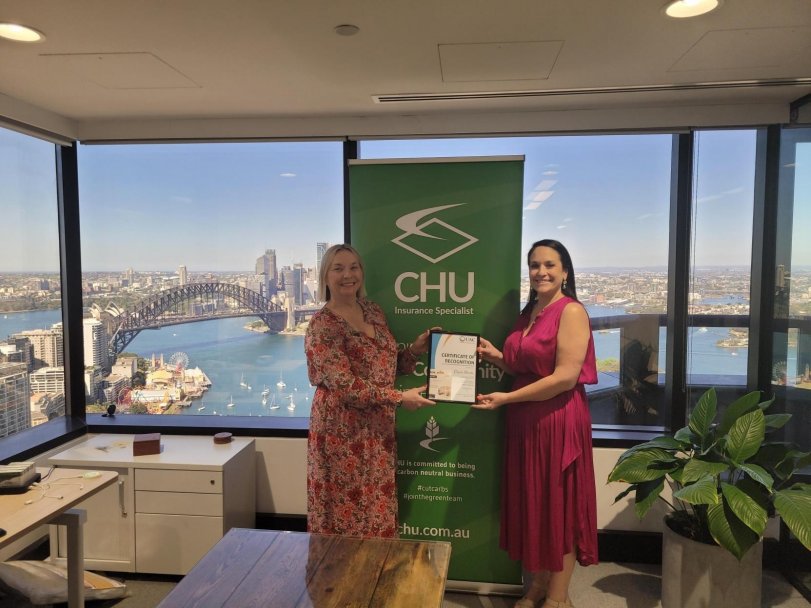
CHU Underwriting Agencies has secured the gold medal for Strata cover and the Brokers’ Choice Award for Residential and Commercial Strata Cover in the annual Brokers on Underwriting Agencies survey conducted by Insurance Business Magazine.
This year’s win underscores the consistent trust and support CHU is proud to enjoy from brokers across Australia.
CHU CEO Kimberley Jonsson commented, “In what has been a challenging year for the insurance industry, CHU appreciates the ongoing support from the broker community, and I would like to personally thank all the brokers who voted for us. We are dedicated to continual improvement and providing market leading, innovative strata insurance products and services; now and into the future.”
Jonsson also acknowledged the dedication of the CHU team, highlighting their customer-focused approach from underwriting to claims processing. This commitment to service excellence has undoubtedly contributed to CHU’s ongoing success in the highly competitive underwriting landscape.
Winning these awards serves as a testament to the importance brokers place on specialised knowledge and expertise when engaging with underwriting agencies.
At CHU, we proudly celebrated Inclusion@Work Week with the announcement that we have been recognised by the Diversity Council of Australia (DCA) as an Inclusive Employer 2023-2024.
The DCA’s Inclusion@Work Index consistently shows a strong link between inclusion at work and team performance, with similar results for inclusive managers and inclusive organisations.
Claire Burke, CHU’s Manager of National Specialty Risk, encapsulates the essence of diversity and inclusion, by living out the values of CHU in her day-to-day role at CHU.
Claire has been with CHU since 2011 when she joined our NSW/ACT Customer Service Team. Over the years, her passion and dedication led her through various roles, including her current role as head of the National Specialty Risk Team.
The National Specialty Risk team plays a pivotal role in managing complex and challenging accounts from an underwriting perspective, assisting brokers and strata managers with properties and buildings that may have defects or complex risks associated with them.
As an underwriting professional, Claire navigates interactions with clients and colleagues from diverse backgrounds. Understanding the nuances of these interactions has allowed her to build strong relationships, essential in her role.
Claire has been heavily involved in D&I from an insurance industry point of view as well as representing CHU. Here is what Claire had to say about the importance of Diversity and Inclusion in the workplace.
Why is D&I important to you?
D&I is important to me because it promotes awareness and shines a light on the fact that we are all humans, that have our own lived experiences and characteristics that are with each one of us everywhere we go including the workplace. By embracing D&I in the workplace, it allows people to be comfortable to be themselves at work, share facets of their lives, share their ideas and feel included. When people feel comfortable to share their lived experiences, we have the opportunity to learn and have greater awareness and understanding of people’s lives and communities outside of our own.
From my own personal experience, I have always felt comfortable being “out” at CHU. From the day I started, I never felt like I needed to hide who I am or that I am in the rainbow community. I’m proud and always will be, a voice for those that do not feel like they can speak up. I have my pronouns on my email signature, my Teams status, and all socials so the beautiful people in the trans and gender diverse communities know that I represent a safe space. I know how meaningful it feels to have active allies showing their support for the rainbow community.
How have you been involved in advocating for a diverse and inclusive workplace?
Since 2018, I have attended Dive in Festival events. Dive In Festival is a global festival of events across the insurance industry that runs for three days every September that cover a very large range of topics. The sessions that involve speakers sharing their lived experiences or those of loved ones are incredible. My highlight from the 2023 Dive In Festival would be the session I attended that focused on menopause, how little support there is and how little is spoken about it. I would like to bring this discussion to CHU.
I also participated as a panel speaker at the 2023 ANZIIF Diversity and Inclusion Seminar. I really loved this experience as it gave me the opportunity to speak from my own lived experiences, on what I do at CHU in this space and why I do it. It was my first public speaking opportunity, completely outside of my comfort zone, but it was a great opportunity to challenge myself.
How does D&I benefit CHU’s workforce and customers?
D&I isn’t just a box to tick at CHU; it’s a strategic focus. By nurturing an inclusive environment, CHU enjoys a highly engaged workforce, diverse talent pool, and a wealth of varied perspectives. This diversity enriches our organisation and allows us to better serve our customers and adapt to their unique needs.
CHU’s commitment to D&I manifests in tangible ways. For our customers, we’ve developed multilingual resources, including a ‘What is Strata Insurance?’ video in Mandarin and subtitled versions in various languages. We offer interpreter services in over 160 languages and provide support services for physical and mental health, as well as domestic violence.
CHU has recently been recognised by the Diversity Council Australia as being an Inclusive Employer and this is a real testament to the commitment that CHU has in creating an inclusive space to work.
Embracing differences strengthens us, enables us to serve our customers with empathy, understanding, and expertise. Together, we’re not just insuring properties; we’re building a community where everyone’s voice matters.
There are many roles and responsibilities within the strata industry and sometimes it can be difficult to understand these roles and who to turn to when you need assistance.
At CHU, we understand the complexities of the strata industry and we’ve created a series of interactive videos that will shine a light on some of the key roles within the strata industry.
Whether you’re a first-time apartment owner navigating the world of strata, or an aspiring professional aiming to make a mark in the industry, our interactive series is tailored for you.
Our interactive video series, Being a Strata Professional, is your ticket to the heart of the strata industry, offering insights and expertise directly from the source.
Throughout this series we will introduce you to key professionals from the industry. Each expert has taken the time to explain their role, the intricacies of the industry and some of the deeper insights only experience can deliver.
In March 2023, the inaugural CHU FuCHUre Forum 23 took place in the sunny Gold Coast. A diverse group of CHU team members attended the forum and worked together with senior leaders to identify future goals, potential areas of growth and innovation for both the business and strata industry.
At the end of the event, 4 project teams were formed and each team was tasked with a specific challenge to work on over the coming 7 months.
Fast forward 7 months to Friday 20 October 2023, in an exciting ‘Shark Tank’ inspired event, the CHU teams came together in Sydney to present their ideas to an esteemed panel of ‘sharks’. The panel included CHU’s CEO Kimberley Jonsson, CFO/ COO James Makin, Learning and Devlopment Manager Steve Brisson, Head of People and Communications Kristy Pownall and Steadfast’s COO Nigel Fitzgerald. We also had a special guest CHU Chairman of the Board, Philip Purcell.
The teams presented their ideas to tackle complex challenges of the future of CHU. Through collaboration, brainstorming, and determination, they crafted innovative solutions that have the potential to revolutionise how we operate.
They were encouraged to dream big, present blue-sky ideas but also address some of the practicalities of implementing some of these ideas such as budget, resources and technology.
The result? An explosion of exciting ideas that promise to shape the future of CHU.
Witnessing the synergy and enthusiasm in the room was truly inspiring. The diversity of thought, combined with our shared commitment to excellence, resulted in a whirlwind of creativity that was both energising and contagious
CEO and Shark, Kimberley Jonsson
While we can’t reveal all the ideas just yet, be prepared for innovations in customer service, process optimisation, and technological advancements. These ideas represent the spirit of CHU – bold, forward-thinking, and customer-centric.
Philip Purcell, Chairman of the board of CHU said, “It was a privilege to be here to witness this very exciting group of people gathered under the brand of CHU, these amazing ideas all had one thing in common, they put our customers at the centre of the solution, and that is what CHU is all about.”
Kimberley Jonsson, CEO said “I have never been in a room that started and finished with such an amazing level of energy. We know we have a lot of work ahead of us, but I am more confident than ever that the fuCHUre of CHU is very bright!”
CHU, the leading strata insurance specialist, is proud to announce an industry-first integration with ENData that will streamline and enhance the claims management process.
CHU’s StrataTech platform and ENData will be integrated. ENData is a platform used by assessors, builders and repairers to manage and automate strata property end to end claims processing. This innovative integration will benefit brokers and strata managers in managing claims for their clients.
Utilising this integration with StrataTech, CHU will streamline the claims management process, reduce costs, lighten workload and allow real-time visibility on claims repairs. This development creates a seamless link between all stakeholders in the claims process. It empowers brokers and strata managers with critical and real-time updates resulting in more efficient claims resolution.
Key Benefits of this new integration with StrataTech:
Transparency: Brokers and strata managers now have unprecedented visibility into the progress of claims. System-generated messages and real-time updates from CHU Assess and builders utilising ENData provide a clear picture of the actions taken at every step of the claims journey.
Streamlined Workflows: Through automation, the process of allocating and managing repairs and replacements will be simplified which will help resolve claims quickly. This reduces administrative delays and minimises the potential for miscommunication, resulting in faster claim resolutions.
Improved Service and Enhanced Customer Experience: Property owners and strata communities’ benefit from a smoother claims process. The workflow driven approach for suppliers ensures a greater level of consistency and quality of workmanship resulting in better claims outcomes for customers.
Data-Driven Insights: The integration enables CHU to capture critical data, facilitating continuous improvement and cost minimisation in its claims management processes.
CHU’s CEO, Kimberley Jonsson stated, “This innovation represents a significant leap forward in our commitment to providing industry-leading strata insurance solutions. We are empowering brokers and strata managers with the real-time information they need to navigate the claims process and provide greater ease and efficiency, resulting in a better experience for their clients.”
CHU continues to lead the way on technology for the strata industry. This integration is being rolled out for all CHU’s claims, starting with NSW, intermediaries will start to see updates and automated messages from ENData within the StrataTech’s ‘Claims View’ over the next few months.
Brokers and Strata Managers are invited to learn more about this exciting development to ‘Claims View’ via StrataTech on our website chu.com.au or by contacting CHU’s BDM Team.
The Making a Difference Recognition Awards highlight individuals across different sectors in insurance who have gone above and beyond to display exemplary professionalism in their workplace, and with their customers.
This award shines a light on the industry’s quiet achievers and we are delighted to announce that CHU Specialty Risk Manager Claire Burke is the recipient of this award for 2023 in the Underwriting category.
In her current role, Claire has carved a niche within CHU for specialty risk management. Claire assists strata owners and intermediaries with complicated buildings, looking to provide an insurance solution, while maintaining CHU’s underwriting integrity.
At CHU, diversity and inclusion is one of our core pillars, and Claire has been a strong advocate of this vital initiative over the past few years.
Claire was a panel member for ANZIIF’s Diversity and Inclusion Seminar earlier this year, as well as participating in the Dive In Festival. These events aim to address issues surrounding equality, diversity and acceptance within the insurance industry.
Upon receiving this award, Claire Burke said, “I’m proud that through my work I can assist a diverse range of customers by sharing my knowledge and expertise.
“Being recognised for my contribution to our company and our industry is very humbling and I am very grateful for the acknowledgement.”
CHU CEO Kimberley Jonsson said, “On behalf of CHU, I would like to congratulate and thank Claire for her tireless efforts, both in her role and in her advocacy of D&I.
“We are all incredibly proud of Claire and excited that she is being recognised for making a difference.”
Australia’s diverse climate brings its own set of challenges for strata buildings. From scorching summer sun to torrential rain, and even the occasional hailstorm, Strata Managers, Insurance Brokers, and lot owners must be prepared for all sorts of weather events.
At CHU, we’ve seen almost everything in our 45 years of insuring strata buildings in Australia. This article outlines steps to weatherproof your strata building and protect your investment, regardless of the elements.
1. Do your research:
Begin by assessing the specific weather risks your strata building faces. In Australia, this can range from bushfires, to flooding to cyclones with some areas prone to these events more than others. Due to climate change, these events have been more frequent and severe so it is important to get as much up to date information as you can from local weather experts and meteorological services to understand the historical weather patterns and potential risks in your area.
2. Review Your Insurance Coverage:
Ensure your strata building is adequately covered for all weather-related events, it is important to understand what your insurance covers and that your sum insured covers you for the full replacement value of the building. When was the last time you had your building valued? A lot has changed in these inflationary times in terms of costs to rebuild, costs of labour and materials, so it is important to have an up-to-date valuation. When it comes to your insurance policy, discuss the inclusion of flood or even consider selecting optional Catastrophe coverage. If disaster strikes, such as bushfire or cyclone earthquake, Catastrophe cover comes into effect when the Insurance Council of Australia declares a catastrophe by issuing a catastrophe code. It covers the increased cost of building and repairs, due to the huge demand for builders and tradespeople.
3. Implement Regular Maintenance:
Prevention is better than cure. Maintenance is key to weatherproofing your strata building. Develop a maintenance schedule that includes regular inspections of the roof, gutters, and drainage systems. Ensure that any loose or damaged roofing materials are promptly repaired to prevent leaks during heavy rain. Trim trees, overhanging branches, and clear piles of leaves.
4. Clear your Drainage Systems:
Effective drainage systems are crucial to handle heavy rainfall and prevent water damage. Clean and maintain gutters and downpipes regularly, ensuring they are free from debris. Consider installing or upgrading stormwater management systems to redirect water away from the building.
5. Develop an Emergency Plan and know who to call:
Most buildings have representatives on their body corporate/strata committee who volunteer as fire wardens and/or safety officers. Ensure that all residents are aware of evacuation routes and safety protocols. CHU has emergency contact numbers for insurance brokers, strata managers, lot owner and has created a specialised CAT (catastrophe) team of experienced claims consultants ready and able to help post a major weather event.
6. Keep Everyone Informed and Educated:
It is important to introduce and educate new owners and residents about weather-related risks and procedures. Encourage them to take individual precautions, such as securing personal belongings during storms and preparing emergency kits with essential supplies.
7. Engage Professionals:
Prevention is better than cure, when conducting assessments of your building – it is important to engage professionals like building engineers, arborists, and roofing contractors to assess and where possible rectify any potential risks.
8. Consider a plan for upgrading the building envelope:
The building envelope encompasses all the exterior elements of a building that separate the interior conditioned spaces from the exterior environment. This includes walls, roofs, floors, windows, doors, insulation, and any other components that form a barrier between the inside and outside of the building.
Consider investing in weather-resistant materials and construction techniques to strengthen the building envelope. There has been a lot of advancement in materials for these types of construction elements – if your building is quite old, retrofitting and replacing some of these elements may be a costly exercise but it will pay off in the long run, not only protecting the building from weather events, but it can also save you electricity, keep you warmer, cooler and quieter in your home environment. This might be something the owner’s corporation needs to consider creating a special levy or fund and plan for the future.
9. After an Event:
If a disaster does strike, it is best to act swiftly. Reach out to the residents or conduct a quick inspection of the property to see if any damage has occurred if it is safe to do so. If damage has been incurred, gather as much information about the units or common property that has been damaged including any contact details for residents affected. Get in touch with your strata manager, insurance broker or insurer directly who will be able to assist with make safe, repairs and possibly temporary accommodation.
Preparing your strata building for all types of weather events is a proactive approach to safeguarding your property investment and of course the safety of all residents. By conducting risk assessments, maintaining your property, and staying informed, you can weatherproof your strata building against the ever-changing Australian climate.
Remember, when it comes to protecting your strata property, it is better to be overprepared than unprepared for these types of weather conditions. Contact CHU or your insurance broker to get a quote on residential strata insurance or to learn more about what is covered in your policy in terms of weather events.
Leading strata insurance specialist CHU has again won the Underwriting Agency of the Year Award at the Australian Insurance Industry Awards after taking out the award in 2021 and 2022. This award recognises an Australian underwriting agency that has demonstrated excellent technical skills, strong underwriting results and outstanding customer service.
“This win is validation of our strategic direction and efforts to lead the industry. We are truly humbled to receive this prestigious award once again.”
CHU CEO Kimberley Jonsson
“We are all extremely proud of what we achieved in 2022. It was a massive year of growth, development, innovation and importantly, giving back to our people and our community.”
The Judges remarked that CHU stood head and shoulders above an already excellent field of contenders, with its best practice approach to people development, industry contribution and strong focus on community work and environmental strategy. CHU was highly commended for its improvements to its services including a dedicated catastrophe response team and technology enhancements. Additionally for its sophisticated education and training programs for brokers and strata managers, its CHUniversity L&D initiative for internal staff, and the company’s FUCHURE CHU initiative. The judges also applauded CHU for its continued efforts to offset emissions, including building a 60 per cent electric or hybrid fleet and funding the planting of trees.
“We intend to continue as thought leaders within our industry, through sustainable business practices, innovation and collaborative partnerships. The future is bright for CHU, and we will continue to act with integrity, build strong relationships and work towards a sustainable future for the whole community.”
For further information and media enquiries contact us.
Jess Sassella works for CHU in our claims team and has been an integral part of the team since joining after a break from the workforce. After focusing on her family as a stay-at-home mum for the past 6 years, Jess was both excited and intimidated about the prospect of rejoining the workforce. CHU’s family-friendly, flexible workplace policies made that transition easy for Jess. Here’s what Jess had to say about life at CHU.
“My transition back into the professional world has been nothing short of seamless, thanks to CHU’s flexible working model. As a working parent, juggling the demands of a career and family life can often feel like a high-stakes balancing act. CHU has transformed the way I work, offering me the flexibility to be both a committed employee and an attentive parent.
Flexible Hybrid Working Model
The key to my successful return to work was CHU’s flexible working model. As a parent, I was apprehensive about the prospect of managing my job while still being able to drop off and pick up my son from school, attend appointments and not miss out on important events with my son. CHU’s flexibility allowed me to create a part-time work schedule that accommodates both my professional and parental responsibilities. This meant I could transition back into the workforce with confidence, knowing that I could continue to be present and involved in my son’s life.
During school holidays, CHU’s flexible working model has been a lifesaver. As a working mum, finding childcare or negotiating time off during these periods can be challenging. With CHU, I have been able to adjust my hours to spend more quality time with my son without feeling guilty or overwhelmed. In January I was able to work earlier hours, ensuring I complete my tasks while still being present and available for my child.
Family Friendly Leave Benefits
Another crucial aspect of my smooth return to the workforce is CHU’s leave purchasing policy. This innovative approach enables employees to buy additional leave days, allowing me to take more time off during my son’s school holidays. This not only ensures I’m there for him but also allows us to create cherished memories and maintain a strong family bond. Leave purchasing has truly been a blessing, allowing me to make the most of my time off without the financial burden of unpaid leave.
The CHU Culture
What sets CHU apart is not only its policies but also its company culture. The supportive environment actively encourages and empowers employees to prioritise their well-being and family life. Throughout my journey of returning to the workforce, I’ve never felt judged or ostracised for adjusting my work hours to accommodate my son’s needs. Instead, I’ve been met with understanding and encouragement from both management and colleagues alike.
Through CHU’s flexibility, I have been able to spend more time with my son, witnessing his growth and creating memories that will last a lifetime. I can be present for award presentations, crucial appointments, end-of-the-day hugs, and the little in-between moments of parenthood. And the best part is, I can remain engaged in my work and enjoy the benefits of being a valuable member of the CHU family.
CHU’s unwavering commitment to work-life balance and supportive culture has made it possible to embrace both aspects of my life wholeheartedly, creating a fulfilling and rewarding experience that has allowed me to flourish professionally while continuing to be a devoted parent. I am immensely grateful for the opportunity to work in such an adaptable and supportive environment. CHU’s flexible working environment is a dream come true.
To learn more about CHU’s family friendly policies and flexible working environment, see our work with CHU and our benefits page.
In an era where environmental sustainability is paramount, the need to take meaningful action against climate change has never been more urgent. As individuals and businesses become increasingly conscious of their carbon footprint, innovative solutions are sought to offset emissions and support reforestation initiatives. One such remarkable initiative is The Forktree Project—a registered charity based in South Australia’s Fleurieu Peninsula.
CHU partnered with The Forktree Project in 2019 and has continued this partnership since then. Working with the Forktree Project has played a crucial role in our journey towards carbon neutrality.
As at end of June 2023, CHU has funded 5200 trees since partnering with Forktree in 2019.
More about Forktree Project:
Restoring Nature’s Balance in South Australia
In the picturesque landscape of South Australia’s Fleurieu Peninsula, a pioneering endeavour is underway to heal the scars of human activity on the environment. The Forktree Project, a registered charity, has set its sights on rejuvenating a 133-acre former pastoral property and returning it to its natural state. This ambitious undertaking revolves around the re-establishment of tens of thousands of native trees and shrubs, with the goal of reviving native wildlife, insects, and birds while sequestering significant amounts of carbon dioxide.
The Journey of Restoration
Founded by environmental scientist, author and film maker, Tim Jarvis AM, who leads the project, Forktree relies on the work of a close knit and passionate team along with volunteers and support from corporate organisations such as CHU.
Native Reforestation: A Path to Restoration
The cornerstone of the Forktree Project’s restoration efforts lies in native reforestation. By planting tens of thousands of native trees and shrubs, the project aims to recreate a thriving ecosystem that once flourished on this land. Native vegetation has evolved to harmoniously coexist with the local climate, soil, and wildlife, making it a crucial component of ecological restoration.
Impact on Biodiversity
As the native vegetation returns, it is expected to attract a multitude of native animals, insects, and birds that were once an integral part of this ecosystem. Biodiversity plays a vital role in maintaining ecological balance, supporting pollination, seed dispersal, and nutrient cycling, which are all essential for healthy ecosystems.
Carbon Sequestration: Combating Climate Change
The reforestation efforts of projects like Forktree also hold significant promise in the fight against climate change. Trees are nature’s carbon sequesters, drawing carbon dioxide from the atmosphere during photosynthesis and storing it as biomass. As the newly planted trees grow and mature, they will sequester vast amounts of carbon dioxide, effectively offsetting human-generated carbon emissions.
Community Involvement and Education
The Forktree Project is not just about rewilding the landscape; it is also an opportunity to engage the local community and raise environmental awareness. By involving volunteers, schools, community and First Nations groups in the planting and restoration process, the project fosters a sense of ownership and responsibility towards nature. Educational programs and workshops also play a crucial role in instilling a deeper understanding of ecological conservation and sustainability among the wider public.
The Forktree Project serves as an inspiring model of sustainability and ecological stewardship, paving the way for a greener and more sustainable future and a good opportunity for organisations such as CHU to contribute.
Apartment ownership is on the rise, it is often a great entry point for first home buyers as well as first time property investors. One consideration new owners and investors need to consider is building defects. Whether it is a new build, or you are purchasing into an existing building, defects can arise, and it’s crucial to be aware of them and address them as soon as possible to prevent long-term damage and avoid costly repercussions.
The following article outlines some of the common defects found in apartment complexes. It is important for owners to be aware of what to look out for, and the questions to ask to ensure they have all the details to make informed decisions.
1. Building Fabric
Common defects in the building fabric include efflorescence, peeling paint, and minor settlement cracking. While these may not be immediate causes for concern, if left unattended, they can lead to more significant issues.
2. Cladding
Non-compliant lightweight cladding, such as aluminium composite panels or ACP and EPS, is a common issue in strata buildings. This type of cladding can cause a greater potential for fire to spread quickly in a building.
3. Waterproofing
Waterproofing issues can also cause significant problems, such as leakage from roofs, mould, blistering paint, rising damp, and cracked walls. If left unattended continued water penetration into concrete structures such as balconies can lead to concrete cancer, which rusts the steel within the concrete.
4. Plumbing
Plumbing and drainage issues such as blocked drains, leaking pipes, and sewage backups, can cause significant damage to the building’s structure and pose health risks to residents.
5. Electrical
Electrical issues, such as faulty wiring, can lead to power outages, electrical shocks, and fires, all of which can cause significant damage to the building’s structure and endanger residents.
6. Roof Coverings
Defective roof coverings, caused by poor installation, inadequate materials, or poor maintenance, can lead to water leaks and structural damage, ultimately affecting the building’s value and insurability.
Defects can impact Strata insurance policies, which are designed to cover property damage and liability claims. Most insurance policies exclude cover for buildings with defects within the property damage section of the policy however, exposure to claims under the liability section of the policy remains a concern. Note, that in many cases your building can still be insured with defects, as long as you have fully disclosed the information and taken actions to remediate the defect, the insurer will take into account the age of the building and location among other factors and assess the risk of insuring the building. Defects may result in higher premium or excess to cover the building, and some insurers may in fact deem the building to be too risky to provide the cover.
Building defects can cause significant risks and should be addressed as soon as they are discovered.
At CHU, we recommend utilising reputable builders and developers to reduce the risk of defects, and it is crucial to ensure proper maintenance and remediation should defects be discovered post purchase, or midway through a policy cover.
Defects will impact a building’s value and insurability; it is essential to take action to address defects and maintain the safety and value of your property.
CHU Services has recently launched a new AI powered inspection service, CHU Inspect, which can assist owners, strata managers and brokers to identify defects, and monitor the overall building health. Contact us to learn more about CHU’s latest services.
The move away from petrol power towards electric vehicles (EV) is accelerating as communities try to reduce their carbon footprint and move towards environmentally sustainable living.
CHU has published this article and factsheet to best inform strata residents on what key factors need to be considered as the move towards EV charging stations within buildings continues.
Existing electrical switchboards/cabling within buildings
Will the existing switchboard safely accommodate the increased load resulting from EV chargers?
Will consumer mains/submains be able to handle the increased load and current?
Is the main switchboard or other switchboards in good working order? Note that depending on age and condition, switchboards may need to be replaced to AS 61439-2016 in order to accommodate EV charging stations (see note below).
Installation and maintenance to be done by suitably qualified professionals
You can see from the considerations above, the need to have suitably qualified tradespeople for installation of any EV charging stations is essential. Installation of not only the charging unit but also associated wiring needs to be as per manufacturer’s instructions and in accordance with all relevant building standards is essential.
Information sourced from external surveying and risk engineers (see note below) has highlighted some additional considerations, including (but not limited to):
EV chargers are required to be installed in accordance with Australia Standards (AS 3000-2018 and Appendix P – Guidance for installation and location of electrical vehicle sockets outlets and charging stations, has been referenced by some third parties however, please check requirements with a suitably qualified installer).
Each EV charger is required to have a Residual Current Circuit Breaker (RCBO) installed (some third parties have referenced an electrical current not exceeding 30mA to ensure personnel protection however, again please check with a suitably qualified installer).
Depending upon the supply to an individual strata unit, an EV charger in some instances can consume up to 50% of the available power for that whole apartment, limiting power for other appliances.
Note: The above is not intended to be advice (personal, general or otherwise) for any third party to rely on, nor can CHU guarantee the accuracy of content. Property owners need to make their own enquiries in terms of compliance, maintenance of EV charging stations with suitably qualified contractors.
Cost and maintenance considerations
Who is responsible for the electrical charges associated with charging vehicles?
Body corporate should clearly define to lot owners who is responsible for maintaining the charging stations on a periodical basis, with the view to monitoring equipment or cable damage, or any operational faults on the charging station itself.
Proactive risk management measures
Charging cables and any other associated equipment to be stored appropriately when not in use so as to not present a liability exposure (for example, trips, slips and falls).
Areas surrounding any EV charging stations to be kept clear of any storage, particularly items of a combustible nature.
Ensure periodical maintenance of charging stations, associated wiring on an ongoing basis.
Ensure appropriate fire protection measures are installed in appropriate areas that can be easily accessed in the event of a fire from an EV charging station.